The White Elephant
June 29, 2016
Applying to the Jet Programme is a lot like applying to college. One fills out a lengthy application with a due date in early December. If you are lucky you will get called to your local Japanese consulate in February for an interview. And if you are luckier still you will receive an acceptance letter in April telling you that you have a placement in Japan to teach as an Assistant Language Teacher.
2007 was the second time I had applied to the program and in April of that year I received my letter. My elation was tempered by my placement location: Okinawa Prefecture. My first reaction was WTF? I had read all the information online about how to be successful with one’s application. I had not asked to be placed in Tokyo, Osaka or Kyoto, like all the other applicants who therefore open themselves up to being put anywhere because basically there are few urban placements and most JET Programme participants work out their contracts in the inaka (countryside). I had even asked to be placed in Tohoku as my first choice, a region with few large cities except for Sendai, a rough equivalent of the Appalachias in the US. There were mountains, momiji (maple trees), and most importantly snow that would keep me comfortable. Okinawa had none of those things. And that was ignoring the large white elephant on the island, 12 US military installations and a total of roughly 45,000 US military personnel contractors and dependants. -Didn’t I say that I wanted to live in a foreign country?
I have been a pacifist since highschool. This was around the time of the first Gulf War. I couldn’t mentally de-tangle our country’s selfish reasons for going to war (cheap oil) from the idealistic propaganda spouted by our politicians. 9-11 has not changed my mind since then. It’s more likely strengthened it. And it bothered me that whatever positive impressions I hoped to make on the island, they were likely to be colored by pre-conceived notions of what Americans were or ought to be.
At some point my idealism had to give way to reality. I had asked for an urban placement. I had volunteered be placed somewhere I might have to drive a car to work. I had asked to teach high school rather than younger children. All these things had been given to me. I had spent 2 years working my butt off trying to get to Japan. I paid for and threw all my effort into Japanese classes and a TESOL course at a local college. When push came to shove, I had precious few practical economic reasons for refusing the Japanese government’s offer of a job. So, with a promise from my brother that he would come visit and get me off the island occasionally, I reluctantly departed New York City in the summer of 2007 for Okinawa City, Okinawa.
Like many new English teachers, I took over the apartment from my immediate predecessor, two blocks from a high concrete and wire fence that separates the Japanese municipality of Okinawa City from Kadena Air Base. I quickly learned that my knowledge of Japanese was a way to dispel the assumptions of the locals that because I was a caucasian foreigner, I was there because of some attachment to the US military. I threw myself into studying Japanese, making Japanese friends, and trying to forget that the fence was there. And I learned not to talk politics when I bumped into fellow Americans on the street.
Some parts of my new life in Japan were unbelievably easy because of my placement location; my internet service provider specialized in helping US military personnel living off-base -they spoke English. My auto mechanic was an American expat -he spoke English and was reasonably honest, believing that if it ain’t in fact broke don’t fix it. He told me once to beat my uncooperative A/C fan into submission with my shoe until it really broke six weeks later in the sweltering depths of July -My father would have approved.
Other problems arose during my stay in Japan that were more difficult to solve. Some of them fell squarely on my head. Getting a Japanese driver’s license as my International driver’s permit was about to expire was an expensive and time consuming exercise I’d rather forget (there is no license transfer agreement between the US and Japan if you’re on a Japanese working-visa).
About once a year, a problem would arise peculiar to the situation of a foreigner living in a foreign country that I could not solve by myself with or without the assistance of my Japanese friends and co-workers. Or the self-derived solution would have involved serious inconvenience to my time, health or budget. In each case it was someone from the other side of that fence who came to my rescue. More often than not it was a military spouse, or in one case a teacher, who helped me out of my predicaments. I wish I could describe exactly how these folks helped me, but I understand at least in one case, possibly two they broke rules in doing so, therefore I must remain silent. None of these people who helped me were folks I had known well beforehand or even considered friends. And although I said my “thank you’s” at the time before I went on my way, I don’t think I really understood the level of my appreciation for this help until my fourth and final year in Okinawa when I knew I would be going “home”.
The Okinawans that surrounded me had a remarkable ability to separate their dislike of the US military presence on the island from their feelings towards Americans. Maybe they understand that their real beef is with the Japanese and American Governments who allow the situation with the bases to continue. Maybe it is partly a sense of helplessness or resignation to the status quo. What I do know is this: most Okinawans love Americans. I think more than they love the mainland Japanese who come down in the summer to play tourists.
As an example of this remarkable gift of tolerance, I can’t help thinking of my Japanese teacher, Izumi. She lives in the town of Chatan-cho, wedged in between Kadena Air base and the two halves of Camp Foster. She speaks fluent English and taught me conversational Japanese. She teaches a lot of Okinawans English and many more Americans Japanese. She commonly befriends her students and goes out with them socially to restaurants, karaoke. She took me and another American friend yukata (Japanese casual summer kimono) shopping when we both separately expressed an interest. How generous to start relationships with people who with rare exception are going to leave in a year or two or three? I think she keeps a Facebook presence just so she can keep track of all her friends who have left the island and are now overseas.
My personal return to America was sadly marked by illness, reverse culture shock and a strong desire not to leave this second home of mine. Most Americans, unless they have been to Japan, can’t pinpoint the islands of Okinawa on a map. I always feel they don’t understand why I didn’t want to come back. Oddly enough the people who do understand, who I share this sense of displaced geographic location with, 90% have some connection to the US military: The counselor in a State of Vermont office building who has a pair of shisa sitting on her desk. She knew the word and didn’t try to call them Chinese fu dogs or some such. They had been given to her by a friend in the armed forces. The retired military spouse I met at a convention who laughed hysterically when I recalled the pluses and minuses of salsa dancing with US Marines in Ginowan: the plus, not having to do the limbo in order to dance with a male partner, and minus being how bad the Marines’ pick-up lines were.
Some things don’t change; I’m still a pacifist and my heart is still with the protesters at the Henoko construction site. If I had to say something on behalf of the Okinawan people it would be the following:
If there is resentment, of past violence, of history shaped less by self-determination than victimization, there are far more friendly island smiles and “Mensore!” (Welcome).
If there is envy of wide green lawns, employment or economic opportunity, there is far more generosity, “Douzou,” (Help yourself).
The Skirt Police
September 9, 2015
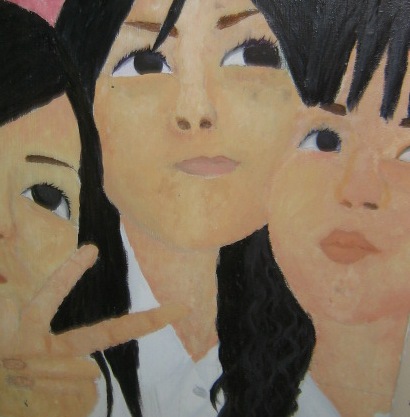
There is more than one right way to do things. If you are living in a foreign country and are not willing to accept the above statement, you are not adjusting and should probably pack your bags and go home. Many JET ALTs spend a lot of time complaining about working life in Japan. Maybe more than they should. They talk about how unfamiliar teachers are here with Communicative Language Teaching techniques, why teachers with limited English ability are allowed in the classroom, and so on…
As a JET ALT I worked at 3 high schools every week. My base school, M.H.S. was a very low academic level school. On Wednesdays, I went to a technical high school where, I taught the same 2 classes with the same teacher every week for the first 8 months of my ALT stint -let’s call him M-sensei. After a time, we developed a congenial rapport that comes from working closely together. I looked forward to going to my technical high school assignment every week.
At this vocational school, English was a low priority, taking a back seat to the 8 vocational programs of study. There was often a fair amount of time to prepare lessons and talk which was a welcome respite from the harried chaos at my other assignments where teachers often approached me 5 minutes before class and asked “-What do you want to do?”
One of M-sensei’s favorite questions was “How are the students at M.H.S.? Are they better than the students here?”
I was usually at a loss to answer, both because I was sensitive to the negative image held of the school where I was based and the fact I disliked picking favorites among my students. And, it seemed to me, that comparing the ‘low academic level’ students at my base school and the technical high school I visited one day a week was like comparing oranges and oranges. The students seem to share the same pervasive lack of interest in academics, English and plans to go on to college. -What’s the difference?
But, if pressed, I would lean toward the technical high school. Because at least the technical high school students had a “purpose”; -they were there to learn a trade. And the classes I taught every week with the same teacher seemed moderately attentive when compared to the loud or quiet chaos at my base school where students wandered in late, talked, slept in class and payed creative attention to all the minute violations of the dress code they could get away with
Needless to say my answer surprised M-sensei, “I think M.H.S. students are better,” He would say. I chalked this up to a case of “the grass is always greener” and let it be.
Time passed and another school year drew to a close. There are 2 certainties in life for Japanese high school teachers: death (probably from overwork) and transfers. At the end of the school year that March, many teachers were moved from one school to another. As M-sensei had spent 5 years at the technical high school, it was time for him to go… -to M.H.S, where they stuck him on the discipline committee. This was the equivalent of being exiled to purgatory,especially for a newly arrived teacher, and I did not envy him one bit.
In a low-level school like M.H.S., actual teaching sometimes takes a back seat to classroom management and discipline. Any minor emergency becomes the teachers’ responsibility. As a result, about half my classes with M-sensei were canceled. He gave the situation a good “ganbaremasu!” and I never heard any complaints. I could admire his dedication to his work, but it put a strain on our working relationship.
During one class we had together, we spent a rare moment of downtime while the students were working, talking to each other. M-sensei was somewhat apologetically telling me about the latest responsibility imposed on him via membership in the discipline committee, as an excuse for his not having much time to come to me beforehand and discuss what we would be doing that day.
I’ll readily admit that as an American (even one with an advanced degree in costume and textiles) I don’t always understand the Japanese obsession with uniforms. Why they wear them (to engender a sense of group identity) and all the creative things students did to subvert the dress code.
An issue of particular concern to Japanese school authorities is skirt length. According to regulation, female students’ skirts should come to a matronly top-of-the-knee-cap. At M.H.S. the girls were particularly sensitive to the messages of pop-culture fashion and particularly insensitive to admonishments from authority figures at school that what they were doing was disrespectful to the school uniform code. During the previous trimester there had been a crackdown on the practice of skirt rolling. The net result was that increasing numbers of students had taken their skirts and had them hemmed to a shorter length than deemed appropriate.
For a moment I was left wondering why they had chosen him and not one of the female staff members to confront the students, unless embarrassing the girls into submission was the point.
“So, you’re the skirt police?” I said. Perhaps thankfully he missed my insinuation that he was some sort of ‘chikan’ for checking the length of high school girls’ skirts.
He smiled as if to say “Well, someone’s got to do it,”
Shortly thereafter, I was teaching at my third highschool a “high-level” academic highschool which was about as far away from my other schools in terms of student motivation, discipline and ambition as one could find in Okinawa. Over 90 percent of its students go on to college. At M.H.S. that ratio was reversed.
In a moment of casual conversation between classes, members of the English staff were asking me familiar sounding questions, “What are the students like at M.H.S.?”
I honestly don’t remember my specific response. I did my usual dodge and evade when asked (as I saw it) to pick favorites among my schools, but I did try to mention some of the difficulties involved in teaching at a technical high school of mostly boys, who cared little about academic subjects and less about English.
One of the senior teachers at that school responded, “Every teacher should have that experience,”
From her perspective, at a school where she worried about her students college applications more than if they were smoking, drinking or dropping out, it would have been very easy for her to blame the students or teachers at either of my other schools for being lazy and inattentive to their work or their studies. And I know some teachers who might have said that, but she didn’t.
Every teacher should have that experience…
Every teacher should be the skirt police…
Himeyuri
September 9, 2015

Having lived in Japan for four years it is difficult for me to single out one day as my “best day” in Japan. My day to day life was lived in Okinawa. Okinawa, though legally and politically part of Japan, is in many ways a different country where the people happen to speak Japanese. While in Japan I did take five trips to see “mainland Japan” and while talking about those trips might be interesting and certainly more lighthearted, I feel it does a disservice to ignore the people and places of the island which formed the core of my Japan experience.
I’d been on the island less than six months and aside from a few business trips into Naha and one foray up to Nago, I’d seen very little of the island. I met a friend on a pen pal site online, Rina, who worked in the local tourist industry as many people do. She spoke English as well as Japanese which helped smooth things over. She was from Itoman, the southernmost city of any size on the island. One weekend day she suggested a trip south. “We will go to Himeyuri monument,” she said.
I knew Okinawa had been the site of a horrific battle in WWII. We would also visit the Peace Prayer Park that day and the very excellent museum there. But the word himeyuri meant little to me beyond the obvious translation “princess lily”. After a drive of two hours, we arrived at a small park like place situated between the usual tourist shops filled with shisa and beni-imo tarts and Ryukyu glass oddly made in Vietnam. My friend explained to me that several hundred nursing students had died in the caves there during the battle and this was a memorial. Given the ferocity of the battle I would not have been surprised if the entire island was covered with memorials to the war, and it is.
My father is something of an amateur historian, and WWII is a favorite field of study. So, I’ve seen museums on the subject in the US, and later I would see the museum at the controversial shrine of Yasukuni in Tokyo. Each tells the same history with a slightly different perspective. What is different about Okinawan war memorials is that history is not told from the perspective of the victors, nor the conquered, but the victims. When you round the gaping hole of the cave entrance where so many once took shelter and enter the museum there is little discussion of the weaponry or strategy used by the opposing Japanese and American forces.
The “nursing students” were not volunteers, they were high school students the same age as the ones I was teaching, who were conscripted into serving in the Japanese army hospitals and then abandoned to the battlefield when the situation became hopeless. The museum cases are filled with pieces of their uniforms, school pictures, sewing kits and small mementos of happier times that they brought with them and were later found in the caves where most of them died.
As I said, the memorial is located in what has become a strip of tourist development along the major route around the southern tip of Okinawa. Less than 1 km down the road, I spotted a building decorated with an enormous flower hat, the type worn by Okinawan court dancers when the island was an independent kingdom.
I asked to stop and Rina obliged. It was a shop of Ryukyu-shikki, or Okinawan lacquer ware. Maybe you are familiar with the type from Kyoto. The Okinawan style is more garishly colored and covered in stylized native flowers, like the hibiscus. As we walked up and down the aisles of brightly colored bowls and bento boxes, my friend Rina explained to me. “Only old people buy this now; young people don’t like this style anymore,” I thought about the young Japanese people I knew in their tiny ikea-inspired minimalist apartments, and understood what she was saying, but I thought it was beautiful. Later, I became a very good patron of the Naha branch of the shop. I think the shopkeepers always remembered me because I was their only Japanese speaking foreign client. The stuff is expensive because it is labor intensive and handmade and I couldn’t always afford to buy much more than chopsticks or a hairpin, but I felt it was important of me to patronize the shop. I always wonder if I go back will it still be there with the shop ladies serving sanpin-cha and small bricks of the black cane sugar to their customers.
The last stop on our southern adventure was Seifa-Utaki, a sacred site both during the present and the Ryukyu Kingdom. Because of the battle there over 65 years ago, very little of Okinawan material culture survives. The castles and other “historic sites” tourists are led to are all very carefully restored reproductions. All that stands at Seifa-Utaki are rocks. The rituals performed there during the Ryukyu kingdom are largely forgotten, but Rina thought it was important to take me there.
With a large part of their material culture destroyed during the war, Okinawa of the present and the future is largely built on memory, the memory of those who survived, and won’t forget. One of the great experiences of travel is to discover how we define ourselves as people by what we chose to remember, and what we chose to forget.
Lyra McMullen
April 29, 2012
The “Michi” Less-Traveled: Matsushima
May 31, 2013

Listed among the three most scenic views in Japan in 1956, Matsushima is a bay dotted with several hundred miniscule limestone islands. These islands are generously coated with a helping of pine trees, hence the name. Matsushima makes for a very interesting day trip from nearby Sendai, as the landscape is truly unique and well-worth a visit, particularly for shutterbugs.
Matsushima is about an hour train ride from downtown Sendai. You can expect to spend a full day riding the ferry and exploring the many small islands and temples that dot its shores. There are two ferry tours of the bay available. One leaves from Matsushima proper and does a loop tour. For a less crowded and slightly longer boat ride, get off the train at Shiogama and follow the signs to the “Marine Gate” to take a ferry across the bay. We chose this option. No need to take the ferry back as you can simply pick up the train a couple stops down the line in the center of the village in order to return to Sendai.
Be sure to visit the local Zen Buddhist temple, Zuiganji. The caves and carvings on the walk to the temple complex are interesting in themselves. While on the islands large enough for footbridges and trails, keep your eyes peeled for charming weather worn temple structures. And cleverly placed jizo (small Buddhist statues) are always ready to pose for a photograph.
Like most areas in Tohoku, you can’t expect a lot of help in English as it is somewhat off the beaten path for foreign tourists. We visited during high summer season (Sendai’s tanbata festival) and were almost the only foreigners in town. The Marine Gate ferry terminal did have a poorly photocopied English guide to the ferry route. The tsunami evacuation signs were also conveniently bilingual. Fortunately, we were blessed with ideal summer weather and calm waves during our visit.
While in Matsushima, you can try local kaki (oysters) for lunch, frequently available as part of a lunch set at the local restaurants that line the shoreline shopping strip. Raw kaki are also available for braver stomachs.
If you are into souvenirs, this is a good place to pick up a kokeshi or two. Kokeshi are wooden dolls turned on a lathe and hand-painted. Some believe the dolls were carved as mementos for mothers grieving over the untimely loss of an infant (a very wooden and un-cuddle-ly surrogate if you ask me!). However, there is little proof of this. A more pragmatic history of the toy is that the local farming population needed a source of income and work activity during the long harsh Tohoku mountain winters, and started carving these quaint little dolls out of the local wood to sell to tourists who visited the nearby onsen.
Kokeshi are available all over Japan but are particularly associated with the Tohoku region. Cheap tourist ones are a couple hundred yen. A nice old or artistic contemporary example can be had for under 1man (10,000 yen). Most of the shops in Matsushima are full of the things. I think the nice ones have a charming folk art quality about them and enjoy grouping them in twos and threes in my apartment. But then, I like dolls of all sorts.
For an overall impression of Matsushima, my brother thought it was a tad more commercially overgrown and tacky than Miyajima and probably was more scenic in ’56 than it is now. We didn’t make it to Amanohashidate while I lived in Japan, the third “most scenic” spot in Japan, so we can’t make a comparison there. Maybe that’s the next trip?
Author’s Note: This piece was written in 2009, shortly after our trip and about a year and a half before the Great Tohoku earthquake and tsunami of March 2011. I am glad to report that Matsushima being a sheltered bay escaped a lot of destruction. Zuiganji temple was even used as a post-disaster shelter. For updated travel information visit japan-guide.com or other travel websites.
The “Michi” Less-Traveled: Sendai’s Tanabata Matsuri
May 31, 2013

Since arriving in Japan, my younger brother and I have gone sightseeing once a year on the mainland. He paid for a year of Japanese classes at a local college prior to my coming here, and in return I plan and plot the trips, functioning as a sort of Japanese speaking tour guide. We’d already done the more well-trodden paths of Tokyo, Kyoto and Osaka sightseeing in 2008 and I decided that 2009was the year to do something I’d missed out one since I didn’t get my desired placement in Miyagi-ken. So, we headed to Sendai for tanabata matsuri.
Celebrated all over Japan in July, Sendai’s tanabata festival takes place from August 6-8th. One can fly into Sendai direct from Okinawa. Sendai is also just a 1 ½ hour train ride from Tokyo by the shinkansen on the Tohoku line, so it can be easily tacked on to a Tokyo excursion. This was the route we took.
Advance reservations for the train from Tokyo are not needed even during festival season, you can usually get a ticket on the same day as your departure. One way to Sendai from Tokyo runs about 12,000yen. Trains leave almost every hour. The one thing you do need to do a month or two early is make hotel reservations. Sendai has many hotels within walking distance of the station (train and bus access) and the arcades, but it does not have many budget accommodations. Rates are set at premium particularly for the 6th-8th of August.
As a small-ish Japanese city with a population roughly the size of Okinawa and off the beaten international tourist path, don’t expect a lot of help in English while in Sendai. Unlike in Tokyo, Kyoto and Okinawa, we found that hotel desk clerks may not be able to communicate fluently in English, and restaurants probably do not have English menus available. I actually found it refreshing to have to spend 3 full days speaking nothing but nihongo (aside from talking to my brother).
We actually arrived one day early for the festival. From the minute we arrived, Sendai did not disappoint. When we first walked into the station we were greeted by the giant crepe paper constructions of kusudama and fukinagashi (ball and streamers).
The main feature of Tanabata Matsuri are the decorations. They are concentrated in Sendai eki (station) and the two pedestrian arcades on the west side of the station, the Chuo-dori and the Ichibancho. The Ichibancho and its surrounding streets are also the main entertainment areas, so keep this in mind when looking for restaurants. These arcades are still lively and vibrant shopping areas unlike many in the country that have fallen into abandonment and disrepair. I highly recommend coming a day early for the festival, like we did, if you want to take pictures, as the arcades get very crowded and it’s hard to take good pictures without too many people in the way. We also visited Sapporo and Tokyo this trip but I think we took more pictures in Sendai than anywhere else.
Each shop or business sponsors its own decorations hung outside the store from bamboo or pseudo-bamboo poles. Local companies also sponsor these decorations filling the streets with a fun and colorful explosion of crepe paper. The decorations range in style from the obviously commercial kirin beer cans to the artistic. Fukinagashi made entirely of folded origami, or kusudama we saw that were in the shape of kokeshi dolls (a regional specialty). The decorations range in height from 4-6 meters and are often hung quite low so that you literally can’t see where you’re going on the arcades. The decorations are bagged up every night for protection from vandals and the weather around 9pm, so if you want nighttime photos, best to go early, as we found out. Also, if it rains heavily, the decorations that are not protected by the arcades or hung indoors will stay bagged all day.
The opening night of the festival, on August 5th, there were fireworks over the river. Following the flood of people from the station, it was a 30 minute walk past the shops and a lot of street vendors selling Japanese style-finger food like dango and yakitori.
Sendai is a city built around its river. One of the few in a Japanese urban area that has not been coerced into an incredibly artificial channel, the river is allowed to meander relatively naturally, and parks grow along its banks giving Sendai its nickname “city of trees”. If you think fireworks are nice, Sendai’s tanabata festival opened with a real bang, 1 ½ hours of nearly continuous state-of-the-art hanabi. It seemed like the entire population under the age of 30 had donned yukata and camped out on the riverbanks to welcome the opening of the festival.
Two nights later the entertainment was a ‘parade’. Not really a parade, more of a street show, along one of the intersections on the Ichibancho. Various performing groups arranged themselves along a park meridian in the middle of the street and did rotating short performances so that everybody could see. The performers were scheduled by type. When we got there the action was already underway. There was an acrobatics set, a marching band set, folk-dancing, a ballet performance of the story behind tanabata (the ‘starry’ romance of Orohime and Hikoboshi) and finally a rousing taiko finale.
Because of our travel schedule we left before the final day of the tanabata matsuri, but we had a great time and highly recommend Sendai’s tanabata matsuri to anyone seeking an opportunity to really practice their Japanese and sightsee on Japan’s road less traveled.
Other Sendai Sightseeing:
One of the nice things about Sendai is that you can see the tanabata festival and still have time to see most of the non-festival city sights during those three days and not feel (as one often does in Tokyo or Kyoto) that you’re leaving half the city unexplored when you finally have to depart. Some other sights that are worth your attention in Sendai are:
Matsushima, named one of the 3 most scenic views in Japan in 1956, is not quite as beautiful or breathtaking as its rival Miyajima. My brother thought it was a tad more commercially overgrown and tacky and probably looked nicer in ’56 than it does now, but the landscape is truly unique. Matsushima is still highly worth the hour train ride and a full day spent riding the ferry and exploring the many small islands and temples that dot its shores. For a less crowded and slightly longer boat ride get off the train at Shiogama before Matsushima proper and follow the signs to the “Marine Gate” to take a ferry across the bay rather than the loop tour from Matsushima harbor. Be sure to try local kaki (oysters) for lunch and if you are into souvenirs this is a good place to pick up a kokeshi, a wooden doll turned on a lathe and hand-painted that greatly resembles an upside down baseball bat or an egg.
Sendai has a local tourist bus called the Loople or ru-puru that runs from the station makes a great loop of all the noteworthy tourist sites in the city center and returns to the station in a one-way circle. 600yen will get you a one-day off-on pass well worth the cost. It takes you to the Zuihoden, Sendai City Museum, and Aoba-jo castle site.
The Zuihoden is the family tomb of the Date clan, the local daimyo family dating from the 17th century. Date Masamune and his sons are buried here. What the tourist brochures understate is the fact that the buildings were all destroyed during the war and reconstructed in the 1970s. They are still lovely and the reconstruction allowed an intensive archeological examination of the tombs, human remains and grave goods. Apparently the heads of the Date clan wanted to go to their eternal rest in giant bronze pickle jars! The story is told in a nice documentary that plays on loop in the museum. The Japanese narration will be challenging but well-worth a watch even if you can’t understand it all, if you have any interest in archaeology or feudal Japan.
Continue your historical study at the Sendai City Museum, the next stop on the Loople bus. A small museum, it can be thoroughly cased in a couple hours. Don’t expect a lot of English signage, though. Come in with a little history of the region under your belt and you will know what you are looking at from Jomon pottery to a painting of Hasekura Tsunenaga, a Date family’s envoy to Rome in the early 17th century. Contrary to what you’ll find in most American museums the restaurant, run by a local hotel, is good and serves a variety of Japanese and Japanized-western food. It will set you back about 1500yen per person.
The last stop that we felt worthy of our attention was Aoba-jo, once the site of the local castle. The castle itself had long since succumbed to earthquakes and the war. All that’s left is a large open area on top of a hill and the outer walls that have been largely reconstructed. As a park, it has a wonderful view of downtown Sendai. The giant omiyage shop was better than most and was honestly mostly filled with local items, not mass-produced crap. A local craftsman was selling kokeshi he made himself and another stall featured old-fashioned candy in marvelous boxed omiyage sets. I found that the Sendai locals were just tickled to see any foreign tourists at all even during the festival season and I walked away with several omake gifts just for making modest purchases and speaking Japanese to the shopkeepers.
Sendai Food:
Like any Japanese city, Sendai is known by its local food specialties. Food items that should be sampled or bought back to co-workers and friends in the form of omiyage. Sendai is particularly known for gyu-tan, zunda mochi, and kamaboko.
Gyu-tan, or beef-tongue, is actually more eater friendly than it sounds. The tongue is sliced very thinly to compensate for its chewy texture. I recommend that you go to one of the gyu-tan restaurants to sample this rather than try to grill it yourself at a yakiniku joint for the best eating experience. Sendai has over 20 gyu-tan joints. There is a map of all of them in the city center (Japanese only). We were given this map by a hotel desk clerk when we politely asked for a recommendation.
We went to Rikkyu, a local chain with 2 or 3 local locations including one on the Ichibancho. They have set dinners that will allow you to sample this local specialty grilled like steak, in curry, and stew, with a side of oxtail soup, for about 2000yen a head. For 400 yen at the register you can buy a 12pack of their house gyu-tan salami. This tastes just like smoked Italian salami from back home.
Zunda mochi is mochi filled with paste made from edamame beans. Remarkable for its bright green color you will see lots of it for sale in omiyage shops and in Sendai station. If you like anko and edamame you will probably take to zunda paste just fine. But beware, like most mochi, the products don’t keep long after purchase. We were able to find some zunda filled manjyuu that had an expiration a week after purchase, not nearly as yummy as the mochi buns however.
Sendai is also known for its distinctively shaped grilled kamaboko, or fish cake. We sampled this in an omiyage shop. It tastes just like most of the other fish cake things I’ve tried in Japan, so unless you’re a fan of reconstituted fish product (like I am) nothing to write home about. It can be purchased vacuum packed for easy transport.
Mura Neko, OOARS, and me
June 25, 2012
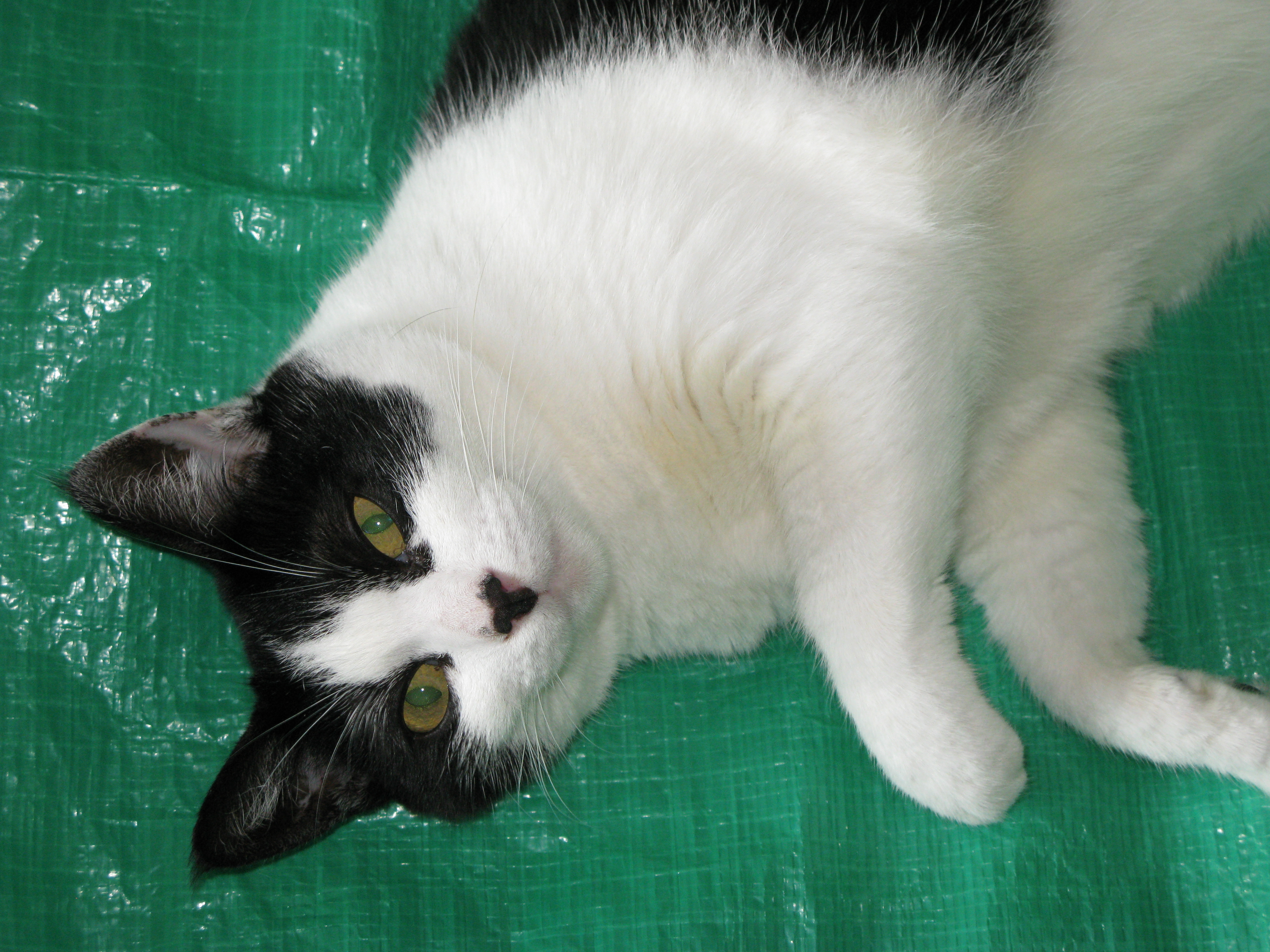
Japan, and Okinawa in particular, has a huge feral/stray kitty problem. Japan does not seem to be quite as up-to-speed with the West in regards to animal welfare. One figure I heard quoted once was a spay/neuter rate of 30 percent for Japan whereas in the USA its 70 percent. That’s not to say people don’t like the cats. This is the land of Hello Kitty and Maneki neko afterall. There are Japanese people who put out food for them; (we all know how that helps the problem!). And I knew a group of ladies who fed several colonies in the park. But most people are poor and don’t have much time or money to help and they consider the mura neko (stray cats) outdoor pets, much like barn cats where they multiply like rabbits, while the dogs get to live inside with the family.
Aya was the first orphaned kitten I took home. I kept her and even paid to have her exported to the States prior to my departure, but it wasn’t too long before I found another one, a little black and white boy on the sidewalk as I was out on my bike. He had an abscessed infection on his back and his 3rd eyelid was swollen and stuck out. I couldn’t leave him, but when I brought him home, Aya reacted very aggressively toward the kitten and to me. I was able to temporarily place him with a friend, but clearly it was not going to work for me in a small studio apartment.
One of the groups doing their little bit to help the animal welfare situation in Okinawa Japan is OOARS Okinawa. The group was founded in 2004 and its volunteers are mostly members of US military and family stationed in Okinawa. Their primary mission is to prevent the abandonment of unwanted pets when service members have to relocate, but they will take in stray kitties provided they have a foster home (the group does not have a fixed shelter location) and the cat tests negative for FELV/FIV. They came to my rescue for poor little Goma, when Aya decided she did not want to share our apartment with another cat. They were also there for Spiral and Sayuri, a pair of orphan siblings I found sitting forlornly without a momma on the side of the bike trail in the park a couple years later. Because the group has no shelter they organize adoption events on the Bases every month or so where people can meet and greet the available dogs and kitties. These little ones I found have long since found their fur-ever homes thanks to OOARS adoptions.
Not long after I turned in the pair of kittens, I found out I would be leaving Okinawa in half a year’s time. The timing of my contract and departure meant that I had to fly Aya home 3 ½ months before I did. It would be a long 3 ½ months without a cat. But I had paid a lot of money for a “pets ok” apartment. What to do to alleviate a little bit of my sadness at having to leave Aya with my folks in Vermont? I contacted OOARS and volunteered to foster for the few months I had remaining.
Their kitty person, Becky, called me right back to say she had the perfect cat for me. “She’s a sweetie,” Becky told me, “but right now she’s living on top of my refrigerator because she doesn’t get along with my other cats.” Her name was Cuddles, and she lived up to her name. Her favorite pastime was giving head-butts to get your attention and wedging herself in between you and the sofa any way she could. When she was happy she would give you one of her “creaky-squeaky” meows that sounded more like someone torturing a squeaky toy, but it was her happy kitty noise.
The only issue Becky warned me about was that she had to be on special food for a sensitive tummy. I told her that was fine I was used to dealing with a special needs cat (Aya). The selection of cat food in Japan is more limited than in the States, so Becky had to bring me Cuddles’ food from the Base when she ran out. What I wasn’t told and quickly figured out was that this was most likely the reason why Cuddles had been in their foster system for over a year. Sensitive tummy, -she was a barf-o-matic! If she ate too much, or anything besides her Purina food, or for no reason at all, she would spontaneously projectile vomit wherever she was. I quickly learned to not feed her anything but her food and to limit her portion sizes so she wouldn’t puke. But still, I would wake up in the middle of the night to gagging noises and come home to find my floor decorated with regurgitated kibble.
Her favorite spot was the TV set. It sat in front of the sliding doors to the balcony, her window on the world outside, and by default the location she covered the most in vomit. A lot of people wouldn’t put up with this and that no doubt was why Cuddles did not have a permanent home. I didn’t care. I missed Aya and I had been dealing with a cat that intermittently peed on things including myself while sleeping, and demolished all the wallpaper in the apartment prior to Cuddles coming to live with me, so her ‘problem’ seemed small by comparison. And what she gave me was immense in return. I just had to do vomit cleanup detail every other day. Thank god for vinyl floors!
I’d like to tell you there was a happy ending to the story, but at the end of my stay there were no new volunteers to take Cuddles. I had already paid $3000 to export Aya and I knew I couldn’t afford another cat. Becky came to pick her up along with all the kitty “stuff” I had accumulated over the course of 3 years with a cat in Japan that I donated to the organization. Becky was a saint. She did her best with 4-5 other animals in her house, but I assume Cuddles went back to being her refrigerator cat.
As of this morning when I checked the OOARS website Cuddles was still available for adoption.
OOARS website: http://www.oaars.org/
Memories of Himeyuri and Ryukyu-shikki
May 21, 2012
Having lived in Japan for four years it is difficult for me to single out one day as my “best day” in Japan. My day-to-day life was lived in Okinawa. Okinawa, though legally and politically part of Japan, is in many ways a different country where the people happen to speak Japanese. While in Japan I did take five trips to see “mainland Japan” and while talking about those trips might be interesting and certainly more lighthearted, I feel it does a disservice to ignore the people and places of the island which formed the core of my Japan experience.
I’d been on the island less than six months and aside from a few business trips into Naha and one foray up to Nago, I’d seen very little of the island. I met a friend on a pen pal site online, Rina, who worked in the local tourist industry as many people do. She spoke English as well as Japanese which helped smooth things over. She was from Kochinda, a town on the southern end of the island. One weekend day she suggested a trip south. “We will go to Himeyuri monument,” she said.
I knew Okinawa had been the site of a horrific battle in WWII. We would also visit the Peace Prayer Park that day and the very excellent museum there. But the word himeyuri meant little to me beyond the obvious translation “princess lily”. After a drive of two hours, we arrived at a small park like place situated between the usual tourist shops filled with shisa and beni-imo tarts and Ryukyu glass oddly made in Vietnam. My friend explained to me that several hundred nursing students had died in the caves there during the battle and this was a memorial. Given the ferocity of the battle I would not have been surprised if the entire island was covered with memorials to the war, and it is.
My father is something of an amateur historian, and WWII is a favorite field of study. So, I’ve seen museums on the subject in the US, and later I would see the museum at the controversial shrine of Yasukuni in Tokyo. Each tells the same history with a slightly different perspective. What is different about Okinawan war memorials is that history is not told from the perspective of the victors, nor the conquered, but the victims. When you round the gaping hole of the cave entrance where so many once took shelter and enter the museum, there is little discussion of the weaponry, or strategy used by the opposing Japanese and American forces.
The “nursing students” were not volunteers, they were high school students the same age as the ones I was teaching, who were conscripted into serving in the Japanese army hospitals and then abandoned to the battlefield when the situation became hopeless. The museum cases are filled with pieces of their uniforms, school pictures, sewing kits and small mementos of happier times that they brought with them and were later found in the caves where most of them died.
As I said, the memorial is located in what has become a strip of tourist development along the major route around the southern tip of Okinawa. Less than 1 km down the road, I spotted a building decorated with an enormous flower hat, the type worn by Okinawan court dancers when the island was an independent kingdom.
I asked to stop and Rina obliged. It was a shop of Ryukyu-shikki, or Okinawan lacquer ware. Maybe you are familiar with the type from Kyoto. The Okinawan style is more garishly colored and covered in stylized native flowers, like the hibiscus. As we walked up and down the aisles of brightly colored bowls and bento boxes, my friend Rina explained to me. “Only old people buy this now; young people don’t like this style anymore,” I thought about the young Japanese people I knew in their tiny ikea-inspired minimalist apartments, and understood what she was saying, but I thought it was beautiful. Later, I became a very good patron of the Naha branch of the shop. I think the shopkeepers always remembered me because I was their only Japanese speaking foreign client. The stuff is expensive because it is labor intensive and handmade and I couldn’t always afford to buy much more than chopsticks or a hairpin, but I felt it was important of me to patronize the shop. I always wonder if I go back will it still be there with the shop ladies serving sanpin-cha and small bricks of the black cane sugar to their customers.
The last stop on our southern adventure was Seifa-Utaki, a sacred site both during the present and the Ryukyu Kingdom. Because of the battle there over 65 years ago, very little of Okinawan material culture survives. The castles and other “historic sites” tourists are led to are all very carefully restored reproductions. All that stands at Seifa-Utaki are rocks. The rituals performed there during the Ryukyu kingdom are largely forgotten, but Rina thought it was important to take me there.
With a large part of their material culture destroyed during the war, Okinawa of the present and the future is largely built on memory, the memory of those who survived, and won’t forget. One of the great experiences of travel is to discover how we define ourselves as people by what we chose to remember, and what we chose to forget.
The Story of the Lucky Cat
January 28, 2012
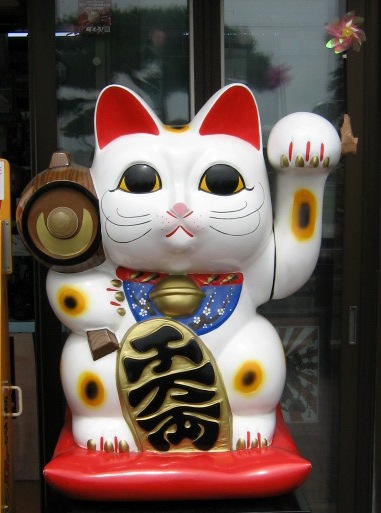
A very long time ago, or as they say in Japanese, “Mukashi, mukashi….”, A wealthy samurai found himself caught outside in a rain storm. He took shelter under the nearest tree.
This tree grew outside the doors to a small local temple. The monks of the temple were poor and did not have much money for its upkeep, including taking care of the cats, who had to fend for themselves by hunting mice who ate the offerings brought to the temple as well as the monks’ food.
Standing under the tree, the samurai thought he could see one of the temple cats beckoning to him from the gates. The man thought to himself, “That looks like a friendly cat, and I have nothing better to do but sit here and wait for the rain to stop. It would be okay to get a little bit wet in order to go over there and pet that nice cat.”
So, the samurai gathered his things and walked through the rain to the door of the temple where the cat sat waiting for him. No sooner had he reached down to pet the cat, than a giant bolt of lighting shot down from the heavens and stuck the tree where he had been sitting. The tree was engulfed in fire.
The samurai stood there for a moment silently watching the tree burn, and contemplated his avoided fate before speaking to the cat, “How lucky is was that I saw you beckon to me, for had I remained where I was I would surely be dead now,”.
“Meow!” said the cat.
“You truly are a cat of good fortune,” he said, “Since you saved my life, a debt which is impossible for me to repay, I will do everything in my power to make your life easier,”.
True to his word, the samurai used his fortune to endow the temple, so the monks were not so poor anymore, and the cats no longer had to fend for themselves. And when the lucky cat finally died of happy old age, the samurai paid for a proper funeral and memorial to the beloved “lucky cat” who had saved his life.
Generations of cats at the temple benefited from the samurai’s generosity and it is said that the cat who saved his life was actually an incarnation of the Buddist goddess of compassion, Kwan-yin.
Story notes:
According to one version of the story, the events in question took place at Goutoku-ji Temple, and the samurai was Li Naotoka.
This story is said to be the origin of the figures of “maneki neko” commonly found in businesses around Japan. Cats with their right paw up beckon money, left paw-customers. Black maneki neko are particularly in favor with women because they are said to drive away stalkers.
Dedicated to “Midori” the squeaky cat who got left behind while I was in Japan, and to “Aya” the Japanese cat who came back with me…
The JET Thing: my arrival journal 2007
January 28, 2012
For anyone who has ever wondered about what its like joining the JET Programme, or picking up everything and moving to a very foreign country, here’s the journal I kept of my first week in Japan four years ago…
July 26 2007:
Left home in Vermont, the only time I came close to crying was when I gave my goodbye petting to my cat Midori. She was sleeping in a ball on the spare bed in my youngest brother’s room, blissfully unaware of what was really going on. Her biggest concern was that my aunt, who had come to visit, had brought her geriatric 19 year old cat Sasha to visit. Midori thinks that all cats want to be her friends, but Sasha is not a friendly cat.
Mom baked an apple pie at the last-minute, stuffed it in the car and drove it to Albany with us where we had lunch, pie and Ben and Jerry’s Ice Cream. Felt kind of like the last supper.
July 27, 2007:
My aunt and I lugged my heavy bags to the Amtrak station to take the train to NYC. I would be staying my last night in the US with a new friend I met at one of the pre-departure activities. I arrived at Christine’s apartment to discover that she also had a cat, Malka, whom she was leaving behind with a roommate. Another round of suppressed tears… It did not help any that Malka was also a love bug.
Orientation: received our flight tickets and everything. They threw a big farewell reception for us at the Japanese Ambassador’s residence. I lived in NYC for 2 years and always wondered what the inside of those ultra-expensive townhouses near 5th Ave. really looked like on the inside, now I know…
There are a lot of rumors about JET application and acceptance rates. At orientation we gleaned a bit of info: Of about 420 applicants to the NYC consulate only 123 were accepted. I met the nice Japanese lady who took part in my interview, she said that of all the interviews she did that day, only 3 (myself included) did her group recommend.
July 28 rented a car to JFK. Christine and I would be separated by flights. She was on an American Airlines flight and I was going JAL. The last-minute departure mystery was why the JAL tickets cost $1800+ while the American ones cost only about $875. Apparently back in the day they used to fly all the JETS over business class. Not anymore.
Bad case of vertigo on the flight for about 1 hour. 13.5 hours of torture. Decent food though, and the game console made things better.
July 29, 2007:
Arrived in Tokyo 3:30pm. Eight or nine hours disappeared into the oblivion of time change. Susan and I, we were both going to Okinawa, roomed together. We went to our room and passed out at 4pm Tokyo time. I awoke at 3:30am. Would repeat this pattern the whole time I was in Tokyo.
July 30, 2007:
Orientation: they served us Western style food for breakfast. Everyone was asked to assemble in one of the ballrooms to listen to the opening speeches given by government big-wigs. We assembled at 10am. The visiting dignitaries arrived at 11am. Clearly they told us to be there so early so no one had to suffer the embarrassment of having us Americans, etc… show up late.
All the prefecture JETs got together for a night out drinking at a local restaurant. Restaurant theme was “Hell” or “jigoku”. It was an all-you-can-drink for 2 hours. After 2 rounds they gave up on us and brought big pitchers of Kirin over. What do you expect with an Irishman, a Scotsman, a South African and a Kiwi?
July 31st more orientation.
August 1, 2007:
Boarded a bus for Haneda airport to take the plane to Naha, Okinawa. The municipal JETS got greeted at the airport by small crowds of people with signs and cheers. Our tight-knit group of 2 days was being split up it seemed permanently. Some of the participants had been placed on remote outer islands. Okinawa was not my 1st 2nd or 3rd choice place to go, but I was glad I was going to be living on the main island.
The prefectural JETS, those of us placed in senior high schools or BOE offices (there was only one) were handed a cold beer and taken to the local hotel or youth hostel to spend the night and have more orientation. The hotel was dingy and hot! There is air-con almost everywhere here but it does not make the rooms cool. Because the outside temp is like 90F and the locals have a very skewed idea of what constitutes “cool”.
August 24,2007
Japan was the last country I would have ever thought I was going to be learning to salsa dance in, but there I was at 1am taking lessons from a E. Indian-Canadian fellow JET named Kadija.
August 26, 2007
It’s Okinawa Obon. Dates are slightly different from the mainland. I do not have to go to work tomorrow. The grocery stores were busy with people buying those pre-packaged gift things that are at the front of every store here. Also the stores have a very nice selection of little mochi tea cakes and pastries out for sale. I have discovered that anything with anko on the inside is my friend!
On the way home I took what I thought was a shortcut. I wound up in some small back alley with a lot of single family homes and apartment buildings. It was dark so I could see inside. It seems this weekend is a time for families to gather together. I could see groups of people from children to obaasan and ojiisan gathered around tables watching TV. There were lots of cars outside the houses.
It seems nice but I felt suddenly lonely, as if I was missing out.
That was only my second disappointment for the day. I took the bus down to Plaza House. They were all out of JLPT test applications.
Ginseikai
January 28, 2012
Originally written 6/30/2008
I learned a new word yesterday, “ginseikai”. I was practicing the kanji for silver and this rather interesting reading popped up. It literally means “silver world”, but is used to describe a landscape covered by ice or snow. A more accurate description of my home state than its actual name of “Vermont” orGreen Mountains. Vermont is only really green from late May through mid September. And there’s the very real possibility that it can be entirely covered in snow from late October to early April.
Speaking of snow, I can’t believe it’s been over a year since I’ve seen the stuff. Or that the vast majority of my students and colleagues here on Okinawa have never seen it! Okay, there are some things I don’t miss –like driving through it, or leaving the house when it’s minus 20 degrees outside. But growing up in and living my whole life the northern latitudes, its something that I’ve come to take for granted. Something that Okinawa is seriously lacking. And my world seems strange without it.
When one of my students or colleagues here tells me they’ve never seen snow, I usually respond by telling them they should travel. Not necessarily as far as America. Japan being a country of almost infinite latitude, finding things like fluffy white ice crystals is as simple as a long weekend and a 4 man airplane ticket to the snow festival in Sapporo.
 etaindesigns