Mura Neko, OOARS, and me
June 25, 2012
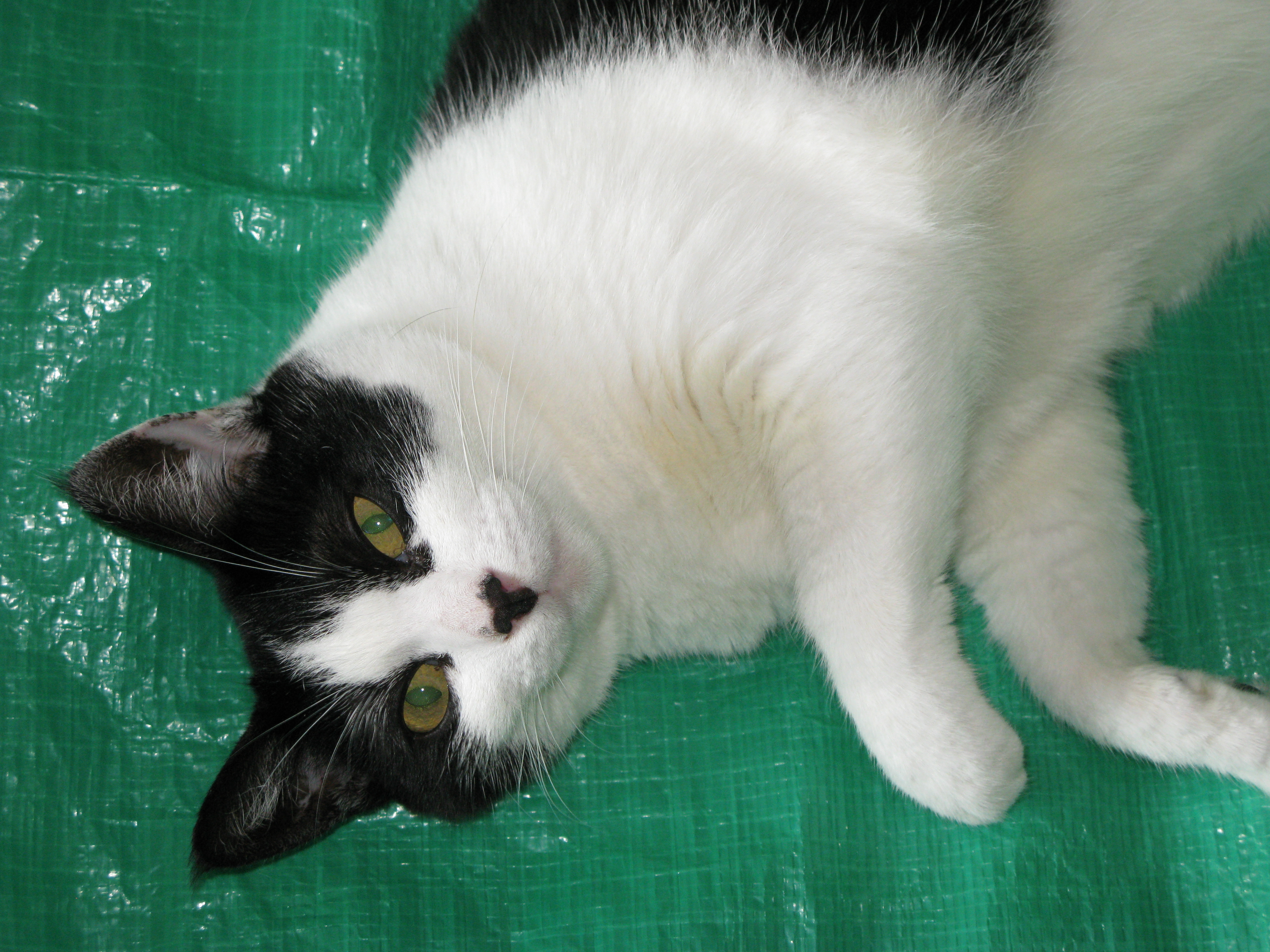
Japan, and Okinawa in particular, has a huge feral/stray kitty problem. Japan does not seem to be quite as up-to-speed with the West in regards to animal welfare. One figure I heard quoted once was a spay/neuter rate of 30 percent for Japan whereas in the USA its 70 percent. That’s not to say people don’t like the cats. This is the land of Hello Kitty and Maneki neko afterall. There are Japanese people who put out food for them; (we all know how that helps the problem!). And I knew a group of ladies who fed several colonies in the park. But most people are poor and don’t have much time or money to help and they consider the mura neko (stray cats) outdoor pets, much like barn cats where they multiply like rabbits, while the dogs get to live inside with the family.
Aya was the first orphaned kitten I took home. I kept her and even paid to have her exported to the States prior to my departure, but it wasn’t too long before I found another one, a little black and white boy on the sidewalk as I was out on my bike. He had an abscessed infection on his back and his 3rd eyelid was swollen and stuck out. I couldn’t leave him, but when I brought him home, Aya reacted very aggressively toward the kitten and to me. I was able to temporarily place him with a friend, but clearly it was not going to work for me in a small studio apartment.
One of the groups doing their little bit to help the animal welfare situation in Okinawa Japan is OOARS Okinawa. The group was founded in 2004 and its volunteers are mostly members of US military and family stationed in Okinawa. Their primary mission is to prevent the abandonment of unwanted pets when service members have to relocate, but they will take in stray kitties provided they have a foster home (the group does not have a fixed shelter location) and the cat tests negative for FELV/FIV. They came to my rescue for poor little Goma, when Aya decided she did not want to share our apartment with another cat. They were also there for Spiral and Sayuri, a pair of orphan siblings I found sitting forlornly without a momma on the side of the bike trail in the park a couple years later. Because the group has no shelter they organize adoption events on the Bases every month or so where people can meet and greet the available dogs and kitties. These little ones I found have long since found their fur-ever homes thanks to OOARS adoptions.
Not long after I turned in the pair of kittens, I found out I would be leaving Okinawa in half a year’s time. The timing of my contract and departure meant that I had to fly Aya home 3 ½ months before I did. It would be a long 3 ½ months without a cat. But I had paid a lot of money for a “pets ok” apartment. What to do to alleviate a little bit of my sadness at having to leave Aya with my folks in Vermont? I contacted OOARS and volunteered to foster for the few months I had remaining.
Their kitty person, Becky, called me right back to say she had the perfect cat for me. “She’s a sweetie,” Becky told me, “but right now she’s living on top of my refrigerator because she doesn’t get along with my other cats.” Her name was Cuddles, and she lived up to her name. Her favorite pastime was giving head-butts to get your attention and wedging herself in between you and the sofa any way she could. When she was happy she would give you one of her “creaky-squeaky” meows that sounded more like someone torturing a squeaky toy, but it was her happy kitty noise.
The only issue Becky warned me about was that she had to be on special food for a sensitive tummy. I told her that was fine I was used to dealing with a special needs cat (Aya). The selection of cat food in Japan is more limited than in the States, so Becky had to bring me Cuddles’ food from the Base when she ran out. What I wasn’t told and quickly figured out was that this was most likely the reason why Cuddles had been in their foster system for over a year. Sensitive tummy, -she was a barf-o-matic! If she ate too much, or anything besides her Purina food, or for no reason at all, she would spontaneously projectile vomit wherever she was. I quickly learned to not feed her anything but her food and to limit her portion sizes so she wouldn’t puke. But still, I would wake up in the middle of the night to gagging noises and come home to find my floor decorated with regurgitated kibble.
Her favorite spot was the TV set. It sat in front of the sliding doors to the balcony, her window on the world outside, and by default the location she covered the most in vomit. A lot of people wouldn’t put up with this and that no doubt was why Cuddles did not have a permanent home. I didn’t care. I missed Aya and I had been dealing with a cat that intermittently peed on things including myself while sleeping, and demolished all the wallpaper in the apartment prior to Cuddles coming to live with me, so her ‘problem’ seemed small by comparison. And what she gave me was immense in return. I just had to do vomit cleanup detail every other day. Thank god for vinyl floors!
I’d like to tell you there was a happy ending to the story, but at the end of my stay there were no new volunteers to take Cuddles. I had already paid $3000 to export Aya and I knew I couldn’t afford another cat. Becky came to pick her up along with all the kitty “stuff” I had accumulated over the course of 3 years with a cat in Japan that I donated to the organization. Becky was a saint. She did her best with 4-5 other animals in her house, but I assume Cuddles went back to being her refrigerator cat.
As of this morning when I checked the OOARS website Cuddles was still available for adoption.
OOARS website: http://www.oaars.org/
 etaindesigns