The White Elephant
June 29, 2016
Applying to the Jet Programme is a lot like applying to college. One fills out a lengthy application with a due date in early December. If you are lucky you will get called to your local Japanese consulate in February for an interview. And if you are luckier still you will receive an acceptance letter in April telling you that you have a placement in Japan to teach as an Assistant Language Teacher.
2007 was the second time I had applied to the program and in April of that year I received my letter. My elation was tempered by my placement location: Okinawa Prefecture. My first reaction was WTF? I had read all the information online about how to be successful with one’s application. I had not asked to be placed in Tokyo, Osaka or Kyoto, like all the other applicants who therefore open themselves up to being put anywhere because basically there are few urban placements and most JET Programme participants work out their contracts in the inaka (countryside). I had even asked to be placed in Tohoku as my first choice, a region with few large cities except for Sendai, a rough equivalent of the Appalachias in the US. There were mountains, momiji (maple trees), and most importantly snow that would keep me comfortable. Okinawa had none of those things. And that was ignoring the large white elephant on the island, 12 US military installations and a total of roughly 45,000 US military personnel contractors and dependants. -Didn’t I say that I wanted to live in a foreign country?
I have been a pacifist since highschool. This was around the time of the first Gulf War. I couldn’t mentally de-tangle our country’s selfish reasons for going to war (cheap oil) from the idealistic propaganda spouted by our politicians. 9-11 has not changed my mind since then. It’s more likely strengthened it. And it bothered me that whatever positive impressions I hoped to make on the island, they were likely to be colored by pre-conceived notions of what Americans were or ought to be.
At some point my idealism had to give way to reality. I had asked for an urban placement. I had volunteered be placed somewhere I might have to drive a car to work. I had asked to teach high school rather than younger children. All these things had been given to me. I had spent 2 years working my butt off trying to get to Japan. I paid for and threw all my effort into Japanese classes and a TESOL course at a local college. When push came to shove, I had precious few practical economic reasons for refusing the Japanese government’s offer of a job. So, with a promise from my brother that he would come visit and get me off the island occasionally, I reluctantly departed New York City in the summer of 2007 for Okinawa City, Okinawa.
Like many new English teachers, I took over the apartment from my immediate predecessor, two blocks from a high concrete and wire fence that separates the Japanese municipality of Okinawa City from Kadena Air Base. I quickly learned that my knowledge of Japanese was a way to dispel the assumptions of the locals that because I was a caucasian foreigner, I was there because of some attachment to the US military. I threw myself into studying Japanese, making Japanese friends, and trying to forget that the fence was there. And I learned not to talk politics when I bumped into fellow Americans on the street.
Some parts of my new life in Japan were unbelievably easy because of my placement location; my internet service provider specialized in helping US military personnel living off-base -they spoke English. My auto mechanic was an American expat -he spoke English and was reasonably honest, believing that if it ain’t in fact broke don’t fix it. He told me once to beat my uncooperative A/C fan into submission with my shoe until it really broke six weeks later in the sweltering depths of July -My father would have approved.
Other problems arose during my stay in Japan that were more difficult to solve. Some of them fell squarely on my head. Getting a Japanese driver’s license as my International driver’s permit was about to expire was an expensive and time consuming exercise I’d rather forget (there is no license transfer agreement between the US and Japan if you’re on a Japanese working-visa).
About once a year, a problem would arise peculiar to the situation of a foreigner living in a foreign country that I could not solve by myself with or without the assistance of my Japanese friends and co-workers. Or the self-derived solution would have involved serious inconvenience to my time, health or budget. In each case it was someone from the other side of that fence who came to my rescue. More often than not it was a military spouse, or in one case a teacher, who helped me out of my predicaments. I wish I could describe exactly how these folks helped me, but I understand at least in one case, possibly two they broke rules in doing so, therefore I must remain silent. None of these people who helped me were folks I had known well beforehand or even considered friends. And although I said my “thank you’s” at the time before I went on my way, I don’t think I really understood the level of my appreciation for this help until my fourth and final year in Okinawa when I knew I would be going “home”.
The Okinawans that surrounded me had a remarkable ability to separate their dislike of the US military presence on the island from their feelings towards Americans. Maybe they understand that their real beef is with the Japanese and American Governments who allow the situation with the bases to continue. Maybe it is partly a sense of helplessness or resignation to the status quo. What I do know is this: most Okinawans love Americans. I think more than they love the mainland Japanese who come down in the summer to play tourists.
As an example of this remarkable gift of tolerance, I can’t help thinking of my Japanese teacher, Izumi. She lives in the town of Chatan-cho, wedged in between Kadena Air base and the two halves of Camp Foster. She speaks fluent English and taught me conversational Japanese. She teaches a lot of Okinawans English and many more Americans Japanese. She commonly befriends her students and goes out with them socially to restaurants, karaoke. She took me and another American friend yukata (Japanese casual summer kimono) shopping when we both separately expressed an interest. How generous to start relationships with people who with rare exception are going to leave in a year or two or three? I think she keeps a Facebook presence just so she can keep track of all her friends who have left the island and are now overseas.
My personal return to America was sadly marked by illness, reverse culture shock and a strong desire not to leave this second home of mine. Most Americans, unless they have been to Japan, can’t pinpoint the islands of Okinawa on a map. I always feel they don’t understand why I didn’t want to come back. Oddly enough the people who do understand, who I share this sense of displaced geographic location with, 90% have some connection to the US military: The counselor in a State of Vermont office building who has a pair of shisa sitting on her desk. She knew the word and didn’t try to call them Chinese fu dogs or some such. They had been given to her by a friend in the armed forces. The retired military spouse I met at a convention who laughed hysterically when I recalled the pluses and minuses of salsa dancing with US Marines in Ginowan: the plus, not having to do the limbo in order to dance with a male partner, and minus being how bad the Marines’ pick-up lines were.
Some things don’t change; I’m still a pacifist and my heart is still with the protesters at the Henoko construction site. If I had to say something on behalf of the Okinawan people it would be the following:
If there is resentment, of past violence, of history shaped less by self-determination than victimization, there are far more friendly island smiles and “Mensore!” (Welcome).
If there is envy of wide green lawns, employment or economic opportunity, there is far more generosity, “Douzou,” (Help yourself).
Mura Neko, OOARS, and me
June 25, 2012
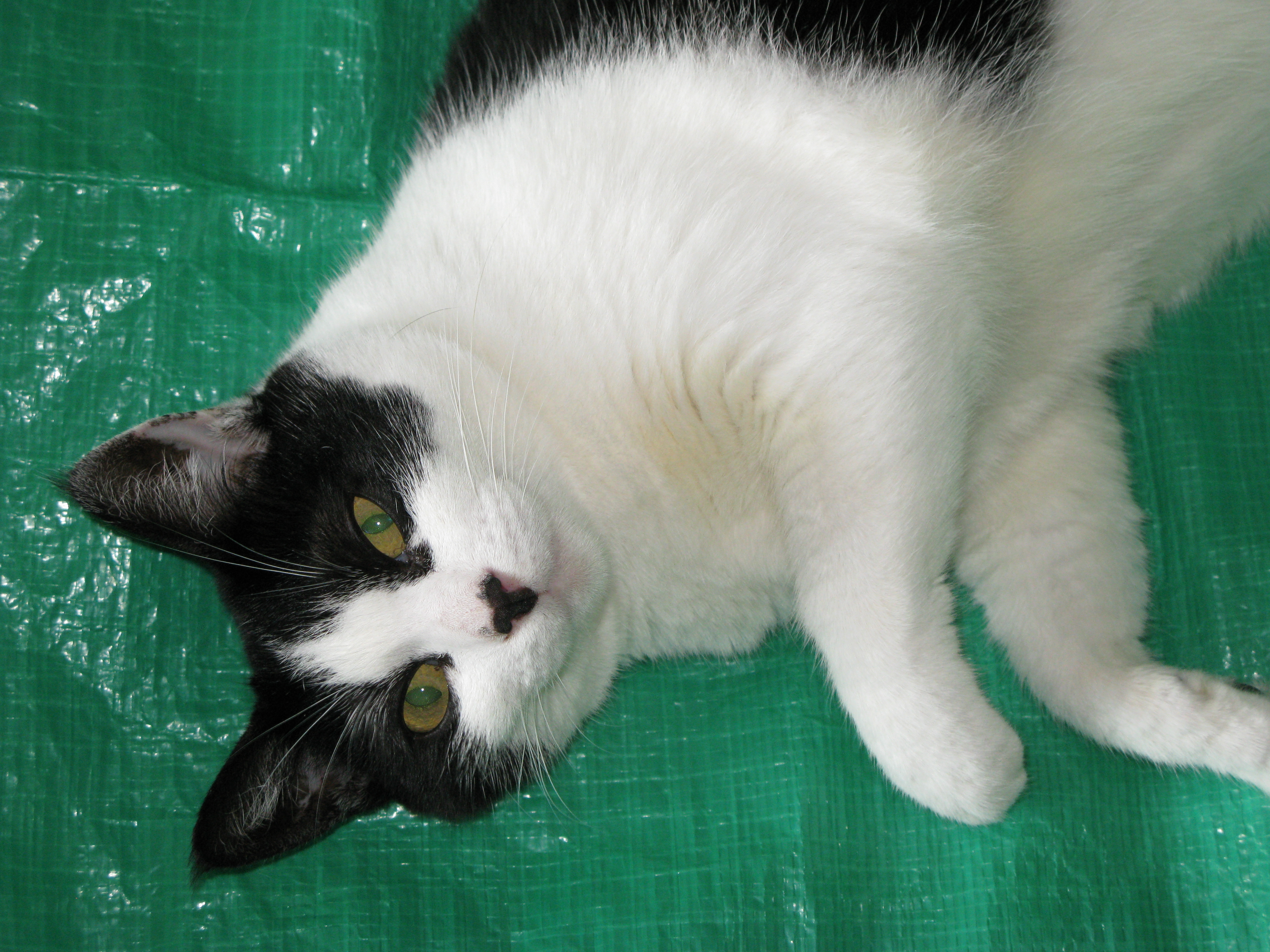
Japan, and Okinawa in particular, has a huge feral/stray kitty problem. Japan does not seem to be quite as up-to-speed with the West in regards to animal welfare. One figure I heard quoted once was a spay/neuter rate of 30 percent for Japan whereas in the USA its 70 percent. That’s not to say people don’t like the cats. This is the land of Hello Kitty and Maneki neko afterall. There are Japanese people who put out food for them; (we all know how that helps the problem!). And I knew a group of ladies who fed several colonies in the park. But most people are poor and don’t have much time or money to help and they consider the mura neko (stray cats) outdoor pets, much like barn cats where they multiply like rabbits, while the dogs get to live inside with the family.
Aya was the first orphaned kitten I took home. I kept her and even paid to have her exported to the States prior to my departure, but it wasn’t too long before I found another one, a little black and white boy on the sidewalk as I was out on my bike. He had an abscessed infection on his back and his 3rd eyelid was swollen and stuck out. I couldn’t leave him, but when I brought him home, Aya reacted very aggressively toward the kitten and to me. I was able to temporarily place him with a friend, but clearly it was not going to work for me in a small studio apartment.
One of the groups doing their little bit to help the animal welfare situation in Okinawa Japan is OOARS Okinawa. The group was founded in 2004 and its volunteers are mostly members of US military and family stationed in Okinawa. Their primary mission is to prevent the abandonment of unwanted pets when service members have to relocate, but they will take in stray kitties provided they have a foster home (the group does not have a fixed shelter location) and the cat tests negative for FELV/FIV. They came to my rescue for poor little Goma, when Aya decided she did not want to share our apartment with another cat. They were also there for Spiral and Sayuri, a pair of orphan siblings I found sitting forlornly without a momma on the side of the bike trail in the park a couple years later. Because the group has no shelter they organize adoption events on the Bases every month or so where people can meet and greet the available dogs and kitties. These little ones I found have long since found their fur-ever homes thanks to OOARS adoptions.
Not long after I turned in the pair of kittens, I found out I would be leaving Okinawa in half a year’s time. The timing of my contract and departure meant that I had to fly Aya home 3 ½ months before I did. It would be a long 3 ½ months without a cat. But I had paid a lot of money for a “pets ok” apartment. What to do to alleviate a little bit of my sadness at having to leave Aya with my folks in Vermont? I contacted OOARS and volunteered to foster for the few months I had remaining.
Their kitty person, Becky, called me right back to say she had the perfect cat for me. “She’s a sweetie,” Becky told me, “but right now she’s living on top of my refrigerator because she doesn’t get along with my other cats.” Her name was Cuddles, and she lived up to her name. Her favorite pastime was giving head-butts to get your attention and wedging herself in between you and the sofa any way she could. When she was happy she would give you one of her “creaky-squeaky” meows that sounded more like someone torturing a squeaky toy, but it was her happy kitty noise.
The only issue Becky warned me about was that she had to be on special food for a sensitive tummy. I told her that was fine I was used to dealing with a special needs cat (Aya). The selection of cat food in Japan is more limited than in the States, so Becky had to bring me Cuddles’ food from the Base when she ran out. What I wasn’t told and quickly figured out was that this was most likely the reason why Cuddles had been in their foster system for over a year. Sensitive tummy, -she was a barf-o-matic! If she ate too much, or anything besides her Purina food, or for no reason at all, she would spontaneously projectile vomit wherever she was. I quickly learned to not feed her anything but her food and to limit her portion sizes so she wouldn’t puke. But still, I would wake up in the middle of the night to gagging noises and come home to find my floor decorated with regurgitated kibble.
Her favorite spot was the TV set. It sat in front of the sliding doors to the balcony, her window on the world outside, and by default the location she covered the most in vomit. A lot of people wouldn’t put up with this and that no doubt was why Cuddles did not have a permanent home. I didn’t care. I missed Aya and I had been dealing with a cat that intermittently peed on things including myself while sleeping, and demolished all the wallpaper in the apartment prior to Cuddles coming to live with me, so her ‘problem’ seemed small by comparison. And what she gave me was immense in return. I just had to do vomit cleanup detail every other day. Thank god for vinyl floors!
I’d like to tell you there was a happy ending to the story, but at the end of my stay there were no new volunteers to take Cuddles. I had already paid $3000 to export Aya and I knew I couldn’t afford another cat. Becky came to pick her up along with all the kitty “stuff” I had accumulated over the course of 3 years with a cat in Japan that I donated to the organization. Becky was a saint. She did her best with 4-5 other animals in her house, but I assume Cuddles went back to being her refrigerator cat.
As of this morning when I checked the OOARS website Cuddles was still available for adoption.
OOARS website: http://www.oaars.org/
Memories of Himeyuri and Ryukyu-shikki
May 21, 2012
Having lived in Japan for four years it is difficult for me to single out one day as my “best day” in Japan. My day-to-day life was lived in Okinawa. Okinawa, though legally and politically part of Japan, is in many ways a different country where the people happen to speak Japanese. While in Japan I did take five trips to see “mainland Japan” and while talking about those trips might be interesting and certainly more lighthearted, I feel it does a disservice to ignore the people and places of the island which formed the core of my Japan experience.
I’d been on the island less than six months and aside from a few business trips into Naha and one foray up to Nago, I’d seen very little of the island. I met a friend on a pen pal site online, Rina, who worked in the local tourist industry as many people do. She spoke English as well as Japanese which helped smooth things over. She was from Kochinda, a town on the southern end of the island. One weekend day she suggested a trip south. “We will go to Himeyuri monument,” she said.
I knew Okinawa had been the site of a horrific battle in WWII. We would also visit the Peace Prayer Park that day and the very excellent museum there. But the word himeyuri meant little to me beyond the obvious translation “princess lily”. After a drive of two hours, we arrived at a small park like place situated between the usual tourist shops filled with shisa and beni-imo tarts and Ryukyu glass oddly made in Vietnam. My friend explained to me that several hundred nursing students had died in the caves there during the battle and this was a memorial. Given the ferocity of the battle I would not have been surprised if the entire island was covered with memorials to the war, and it is.
My father is something of an amateur historian, and WWII is a favorite field of study. So, I’ve seen museums on the subject in the US, and later I would see the museum at the controversial shrine of Yasukuni in Tokyo. Each tells the same history with a slightly different perspective. What is different about Okinawan war memorials is that history is not told from the perspective of the victors, nor the conquered, but the victims. When you round the gaping hole of the cave entrance where so many once took shelter and enter the museum, there is little discussion of the weaponry, or strategy used by the opposing Japanese and American forces.
The “nursing students” were not volunteers, they were high school students the same age as the ones I was teaching, who were conscripted into serving in the Japanese army hospitals and then abandoned to the battlefield when the situation became hopeless. The museum cases are filled with pieces of their uniforms, school pictures, sewing kits and small mementos of happier times that they brought with them and were later found in the caves where most of them died.
As I said, the memorial is located in what has become a strip of tourist development along the major route around the southern tip of Okinawa. Less than 1 km down the road, I spotted a building decorated with an enormous flower hat, the type worn by Okinawan court dancers when the island was an independent kingdom.
I asked to stop and Rina obliged. It was a shop of Ryukyu-shikki, or Okinawan lacquer ware. Maybe you are familiar with the type from Kyoto. The Okinawan style is more garishly colored and covered in stylized native flowers, like the hibiscus. As we walked up and down the aisles of brightly colored bowls and bento boxes, my friend Rina explained to me. “Only old people buy this now; young people don’t like this style anymore,” I thought about the young Japanese people I knew in their tiny ikea-inspired minimalist apartments, and understood what she was saying, but I thought it was beautiful. Later, I became a very good patron of the Naha branch of the shop. I think the shopkeepers always remembered me because I was their only Japanese speaking foreign client. The stuff is expensive because it is labor intensive and handmade and I couldn’t always afford to buy much more than chopsticks or a hairpin, but I felt it was important of me to patronize the shop. I always wonder if I go back will it still be there with the shop ladies serving sanpin-cha and small bricks of the black cane sugar to their customers.
The last stop on our southern adventure was Seifa-Utaki, a sacred site both during the present and the Ryukyu Kingdom. Because of the battle there over 65 years ago, very little of Okinawan material culture survives. The castles and other “historic sites” tourists are led to are all very carefully restored reproductions. All that stands at Seifa-Utaki are rocks. The rituals performed there during the Ryukyu kingdom are largely forgotten, but Rina thought it was important to take me there.
With a large part of their material culture destroyed during the war, Okinawa of the present and the future is largely built on memory, the memory of those who survived, and won’t forget. One of the great experiences of travel is to discover how we define ourselves as people by what we chose to remember, and what we chose to forget.
 etaindesigns